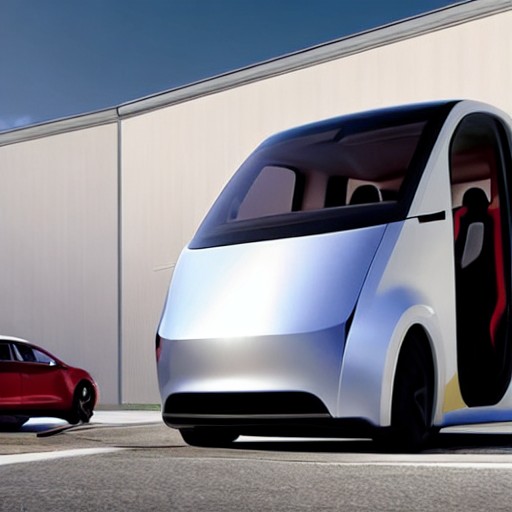
Tesla has quietly unveiled its Cybercab, a new two-seater autonomous vehicle, in an event that lacked the usual fanfare. With 45 Cybercabs registered in Texas, the company is taking a gamble on a stripped-down, less costly approach to autonomous driving. However, many questions remain unanswered, such as when the Cybercab will hit the market and how it will compete with established players like Waymo.
The Cybercab is a two-seat sedan with gullwing doors and no traditional controls, relying on eight cameras for navigation. It's also the lightest Tesla ever produced, weighing just 3,113 pounds. Despite its impressive specs, Tesla still hasn't clarified how many of these vehicles will be available for passenger trips, and when they will hit the market.
The muted launch, with no livestream and a very short invite list, suggests Tesla is trying to avoid criticism. However, it seems the company has more to prove, as it still hasn't delivered on its promise of widespread autonomous driving by 2025. For Tesla's investors, today's event might be a moment of hope, but for others, it's another step in a long journey.
With the Cybercab, Tesla is stepping into a risky new phase. The vehicle lacks traditional controls, like a steering wheel and pedals, and sensors commonly found on other robotaxis. The accessibility video, showing a wheelchair user navigating the vehicle, was particularly intriguing, but also raised questions about the practicality of the design.
For Tesla's owners, the future remains uncertain. The company's $99-a-month Full Self-Driving feature is still just a Level 2 driver-assist system. Tesla's stock price has seen a slight rise, but the future of autonomous vehicles is far from certain. As Tesla continues to push the boundaries of technology, the real test will be whether the Cybercab can turn promise into reality.