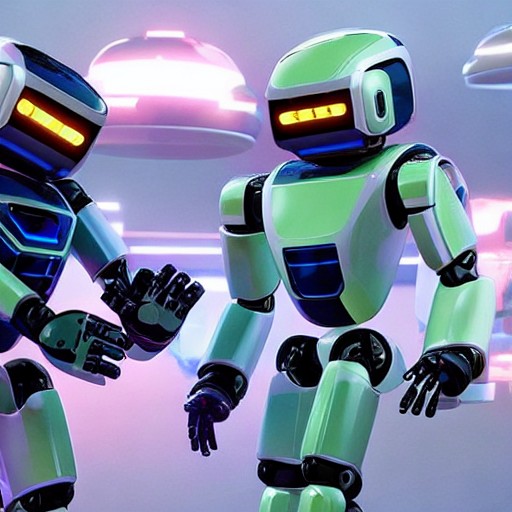
Google DeepMind has unveiled Gemini Robotics 2.5, a significant upgrade to its AI-powered robotic platform. This new version is said to perform real-world tasks with incredible dexterity, reaching a 30 to 100 percent higher success rate in lab tests compared to its predecessor. Key among the improvements are enhanced vision-language models and a more capable vision-language-action (VLA) component, allowing for finer motor skills and more complex tasks.
The latest tests show that Gemini 2.5 can now tie a bow with its five-fingered hands, a feat previously challenging for robots handling deformable objects. However, while these advancements are impressive, the challenge of closing the 4 percent gap remains daunting, as DeepMind director Kanishka Rao notes. This gap, though small, could represent the difference between a robot’s success rate and a human’s in high-precision tasks.
Real-world testing has also been conducted, with Apptronik’s Apollo 2 humanoid robots using Gemini 2.5 to kit automotive parts in European factories, achieving a 96 percent success rate. This performance is a stark contrast to previous robotic AI systems and is a significant step forward in the realm of human-robot collaboration. However, it’s also a reminder that while progress is being made, the journey to full human-like dexterity is far from over.
The release of Gemini Robotics 2.5 comes with an open source safety benchmark called ASIMOV-jailbreak, designed to ensure that these powerful systems operate safely alongside humans. ASIMOV stands for Asimov, a fictional robot from Isaac Asimov’s stories, and jailbreak suggests a push towards breaking out of predefined constraints, hinting at the ambition to push the boundaries of what’s possible with AI in robotics.