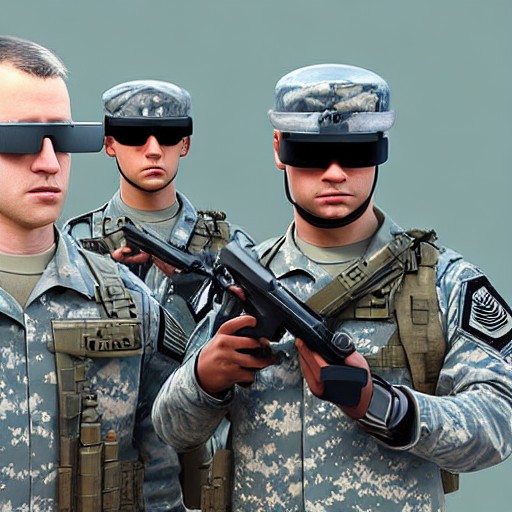
It's been a year since Anduril and Meta entered the US Army's augmented-reality contest. The defense-tech company is prototyping smart glasses that could allow soldiers to order drone strikes with eye-tracking and voice commands.
The idea is to optimize 'the human as a weapons system,' by having drones and soldiers see together, share information seamlessly, and make decisions as one. Anduril has two projects in the works: one for the Army's Soldier Born Mission Command, which won a $159 million prototyping contract with Meta, and its own self-funded EagleEye project.
The glasses could overlay information like maps or AI-driven target recognition onto a soldier’s field of view. This information can be accessed through voice commands or eye movements, but the technology is still in early stages. The Army isn't expected to choose a production winner until 2028 at the earliest.
While this might sound like a cyborg dream come true, it's not without its challenges. Jonathan Wong from RAND warns that soldiers will reject any system that consumes more mental bandwidth than it saves. And given the potential for errors in AI systems, these glasses could introduce new risks to frontline operations.
Anduril is not alone in this race: other companies like Rivet and Elbit are also developing similar technologies. The question remains: can smart glasses truly enhance soldier performance or just complicate their already demanding roles?