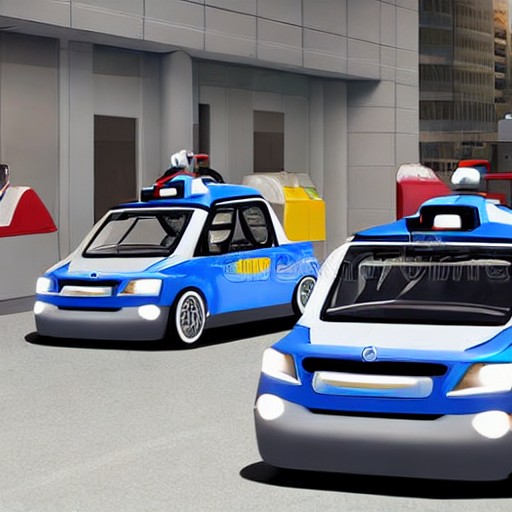
Take a stroll around San Francisco and it won’t take long to spot an empty autonomous vehicle cruising the city’s streets, waiting to be hailed by a rider or heading off to a distant depot to be charged and cleaned. These deadhead miles – an industry term for miles driven without a paying passenger – are one of the biggest barriers between robotaxi companies and profitability.
Redwood City-based startup Aseon Labs thinks it has a fix: parking space-sized automated pods that can be scattered throughout cities to inspect, clean, and charge robotaxis. The company calls them robotic pit stops for the robotaxi industry. And the idea has caught the attention of investors.
Aseon Labs is still in the early stages. The seed funds will be used to build five prototypes of these pods, grow its six-person robotics and engineering team to about a dozen, and secure the real estate needed to build out its network.
The founders settled on the idea of creating smaller, independently powered autonomous pods that could be dispersed throughout a city but as importantly, they could also be moved as needed. The units, which include cameras to inspect vehicles and robotic arms to retrieve lost items and clean interiors, are considered temporary structures. That classification helps Aseon Labs avoid a lengthy permitting process and allows the company to relocate units if a location underperforms.
Aseon Labs isn’t trying to tackle every edge case either. Instead it leans on computer vision and AI – specifically vision-language-action models common in modern robotics – to detect problems the pod shouldn’t try to solve. For example, if a camera detects melted chocolate on a backseat, the robotic arm stands down since attempting to clean it could make the stain worse.