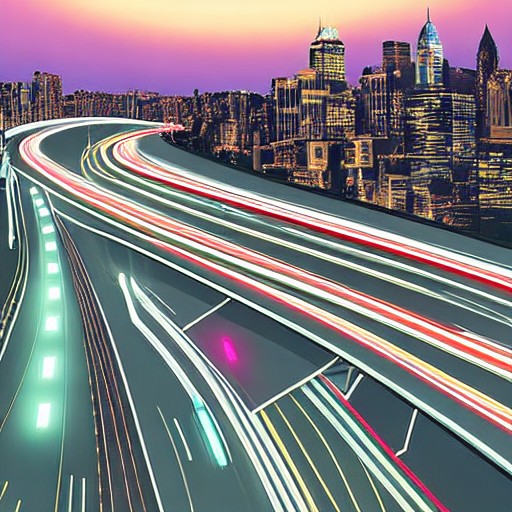
Every so often, I’ll be piloting some sensor-laden, software-defined press car down a dark stretch of highway when an oncoming driver’s high beams arrive like a targeted retinal strike, an involuntary reminder that modern automotive lighting has entered its own lumen arms race.
Anyone who has driven at night in the last few years knows what I’m talking about: A modern crossover crests a hill in the opposite lane, and the cabin briefly fills with enough cold-white light to suggest a police helicopter has joined traffic. The obvious assumption is that drivers are simply leaving their high beams on more often, but the reality is more complicated.
Before cars became the modern mode of transportation, horse-drawn carriages used oil lanterns to light the way, as roads were largely unlit outside of towns and cities. These lanterns weren’t particularly bright, though, meaning that after-dark collisions and near-misses were common.
The late 1880s brought the motorcar, which used railway-style oil lamps. These emitted light like a candle and were prone to spilling, which could cause the vehicle to ignite. Acetylene lamps arrived in the early 1900s. Like oil lanterns, they were dangerous, primarily because they relied on an open flame and produced highly flammable acetylene gas. If the gas nozzle became clogged or leaked, pockets of concentrated acetylene could build up and ignite, causing localized explosions.
Setting aside the occasional inferno, early motorcars did at least one thing well: They were faster than the horse-drawn traffic they were busy displacing. The problem, of course, is that this newfound speed arrived in a world whose lighting technology had not quite caught up with the idea of vehicles moving at more than a brisk trot. Early automotive lamps were less like searchlights and more like dim lanterns politely suggesting that there may or may not be a vehicle present.