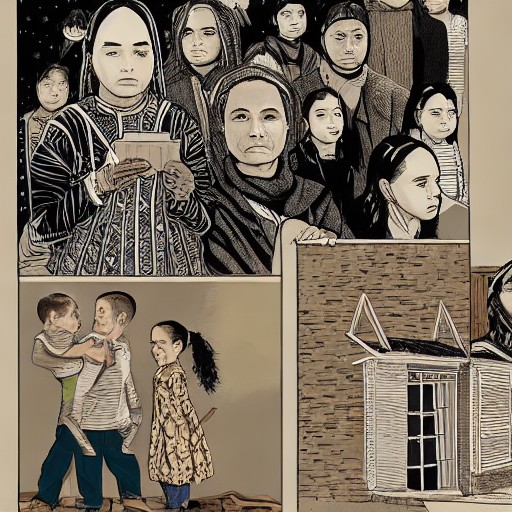
Dana Mashoian Walrath’s The Book of Genocides opens with a harrowing family tale, using X-ray-like illustrations to confront the abysmal realities of genocides worldwide. From the Armenian Genocide to Gaza, Walrath’s work delves into the brutality with unflinching intimacy, pushing the reader to grapple with the empathy required to understand these atrocities.
Walrath questions where such knowledge might take us, as she cites the dual-edged sword of the term 'genocide'. The book highlights how the term, though universal, is often weaponised by those in power, a pattern that echoes throughout the history of violence. This empathetic approach, however, might just offer a pathway to breaking through these barriers.
Through her work, Walrath invites the reader to consider the contradictions within the concept of universal morality. By reimagining this universalism, The Book of Genocides seeks to bridge the gap between past horrors and the ongoing struggles for justice and peace. It’s a call to action, not just to remember, but to act with empathy and understanding.