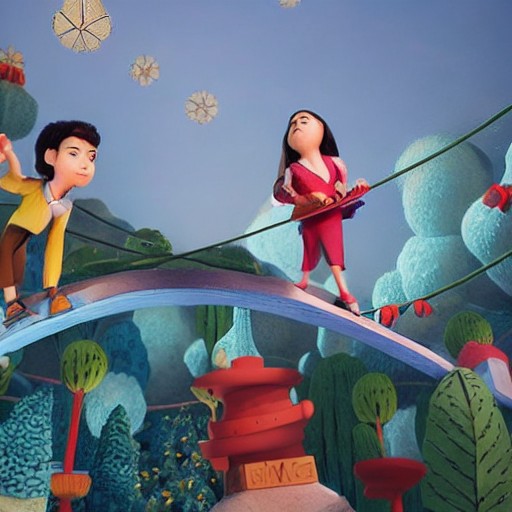
When I was a kid in the 1970s, I couldn't get enough of cartoons. Now, as a grown-up, I'm still a big kid at heart, but the more I watch, the less excited I get. Even Pixar, once a marvel of visual wonder, feels like a machine now. But Laika, with its stop-motion masterpieces, is a breath of fresh air. Its latest film, Wildwood, is making me more excited than anything from Disney, Pixar or Dreamworks.
Laika's films, like Coraline, ParaNorman and Kubo and the Two Strings, are crafted with such detail and care that every frame feels like a physical creation. In Wildwood, every gesture, every blink, and even the wind through a puppet's hair, is painstakingly made by hand. This process, while slow and expensive, ensures that the animation feels alive, with a flicker of imperfection that no algorithm can replicate.
The movie has been built across 136 unique locations, each one meticulously constructed as a physical set. The crows that swarm to snatch Prue's baby brother in Wildwood are a prime example of this physicality. You can almost feel the tension and the potential for something real to happen. It's a stark contrast to the digital perfection of modern animation, highlighting the value of human craftsmanship.
Chris Butler, the screenwriter, hopes that Wildwood will become a rallying cry for the industry against AI. His vision is clear: in an age of digital dominance, the value of tangible, human-made artistry is more important than ever. Wildwood is a reminder that the magic of animation lies not just in the story, but in the countless creative decisions made by real people.