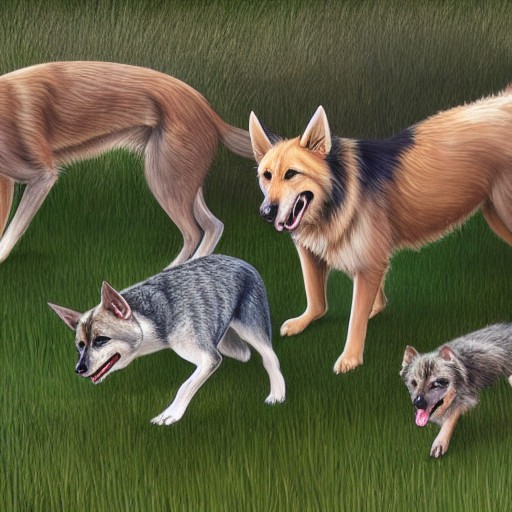
Who first domesticated dogs? Erin Johnson’s film Heavy Water delves into this question and more, intertwining ancient history with modern ecological concerns. In the 1970s, ecologist L. Lehr Brisbin discovered unusual, feral 'Carolina Dogs' in South Carolina. These rare, Dingo-like creatures, free from European DNA, may have deep roots dating back thousands of years. Their presence on a site earmarked for nuclear weapons production led to a halt in environmental devastation, allowing endangered species to thrive.
Johnson’s works, such as To Be Sound Is To Be Solid and Cayo Santiago, focus on our interactions with other species, blending scientific inquiry with a tender, embodied approach. Her exhibition at the University of Georgia’s Atheneum, titled “The Measure Is Something Else,” explores themes of interconnectedness and the mysteries of the natural world. Through her films, Johnson invites us to see the world with fresh eyes, acknowledging the complexity and wonder of ecosystems.
By juxtaposing seemingly disparate topics, Johnson’s films create Venn diagrams of overlap, revealing shared histories and hidden connections. For instance, in To Be Sound Is To Be Solid, she explores the ocean floor and the lives of the women who built the Sea Ranch house she rented, hinting at queer histories submerged in the depths. Her art encourages us to embrace the strangeness of the world, reminding us that sometimes, the deepest mysteries are found in the overlapping middles of our lives.
In an age of rapid technological advancement and environmental crisis, Johnson’s work offers a poignant reminder of our shared history and the resilience of nature. As she puts it, the measure is something else – a perspective that invites us to see the world anew.