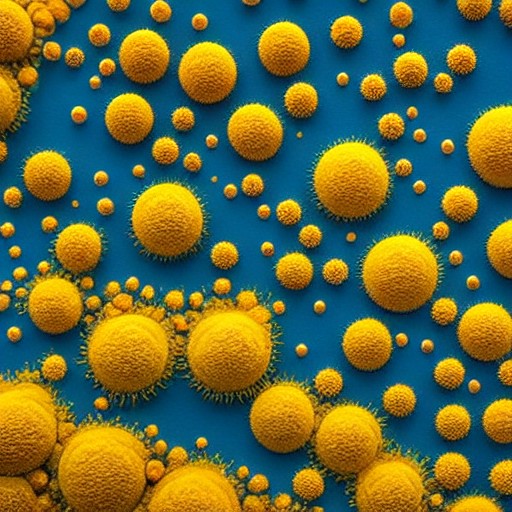
British photographer Barry Webb's macro lens reveals a stunning array of colorful slime molds that look like intricate sculptures. Each species, such as Stemonitis with its wire-like structure, paints a vivid picture of an otherwise unseen world.
Despite their misleading name, slime molds are not fungi or related to plants or animals; they belong to a unique group more closely akin to amoebas. Webb's work is not just aesthetically pleasing but also scientifically valuable, with images submitted for local and national botanical records. His piece on Lamproderma scintillans won an award, while his works are displayed in Germany and the UK.
The ever-evolving world of slime molds, documented by Webb, challenges our perceptions of nature and opens new possibilities for artistic exploration. From mottled gray bulbs resembling snow-topped trees to pink coral-like tendrils, these organisms offer a mesmerizing glimpse into biodiversity.
Webb's contributions are not only visually stunning but also crucial for scientific research, making his work a blend of art and science.