Nearly every company that's trying to deploy AI faces the same challenge: integrating the tech into everyday operations. Industrial giant Caterpillar has spent decades dealing with this issue in the physical world, and now it's using its experience to deploy AI more broadly, including in tools for technicians and its own employees.
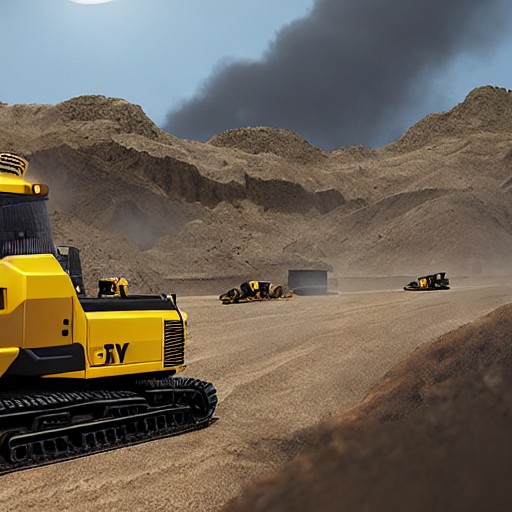
The company's push into the autonomous space started with mining, where labor shortages and hazardous conditions make automation particularly useful. Today, it sells automated haul trucks, drilling, underground loaders, dozers, remote-controlled construction equipment, and more. It also offers a software command center, fleet management, and even remote terrain intelligence as part of its autonomous toolkit.
“Now we’re in this super exciting time where we can take all of that learning from mining and bring it into much more dynamic environments, jobsites, quarries, and construction sites,” the company’s CTO, Jaime Mineart, told TechCrunch on the sidelines of the Ai4 conference in Las Vegas earlier this month.
Caterpillar is now applying AI more broadly, including in tools used by technicians and its own employees. One example is the Cat AI Assistant, which lets field technicians standing next to a machine use voice commands to pull up repair procedures, troubleshoot potential problems, and identify parts that may be needed before beginning a repair. The assistant draws on Caterpillar’s proprietary data, which spans information generated by its connected machines.
The company is also using AI to power software for scanning sites and generating digital twins in manufacturing to analyze operations. And like nearly every other company, Caterpillar is using AI across its enterprise operations, as well as for software development. “We use AI agents to modernize legacy code, generate and test new software, and identify defects earlier,” Mineart said.