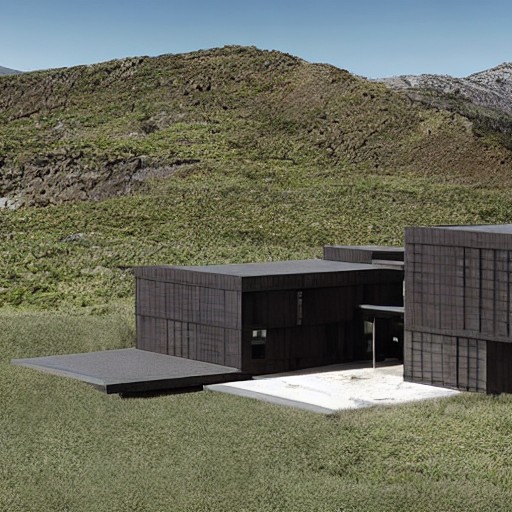
Tom Kundig absorbed lessons in resilience before he even knew the word. As a child, he saw many of the industrial and agricultural buildings of the rural Pacific Northwest abandoned but still standing, the harsh winter conditions no match for their steel columns.
That background came in handy when he was asked to design a house for a young family on a coastal Mississippi site susceptible to severe flooding. The clients, Joel and Jill Kavanaugh, had fallen in love with a plot bordering the Gulf Islands National Seashore in Ocean Springs, Mississippi. The 1-acre parcel looked out onto the Davis Bayou, with the Gulf of Mexico visible in the distance.
As Joel puts it, he and Jill owned the painting; now they wanted the frame. And they wanted that frame to be the work of Tom Kundig, whose rugged houses they had been admiring in magazines for years. Kundig accepted the job and flew to Mississippi to get to know the property, which at its highest points rises just 5 feet above sea level.
Common sense and government regulations told Kundig to raise the house 23 feet off the ground, “above even the mosquitoes,” he jokes. Kundig being Kundig, he would lift the house not onto flimsy wooden posts but onto substantial steel columns. “We wanted to embrace the site’s unique conditions, not camouflage them,” he says.
Kundig is one of many architects designing houses to withstand extreme weather events—as well as fires—which have become especially severe during this period of climate change. And he is one of many architects proving that resilient houses need not look like bunkers. Kundig, who cofounded Olson Kundig Architects in 1986, says, “People come to us for houses that require little maintenance, but that they hope will last for generations.” As it turns out, he adds, “The same houses tend to be resistant to the larger forces of nature.”