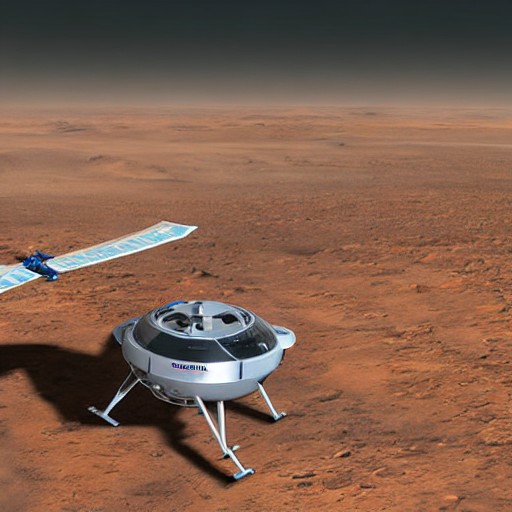
For the first time in over three decades, NASA has no plans to send any new landers or rovers to Mars. Instead, the agency is turning to helicopters to explore the planet's terrain. The first real use of drones for science at Mars will come with the SkyFall mission, a fleet of three pioneering helicopters set to launch as early as late 2028.
The launch schedule is aggressive, with both the SkyFall mission and NASA's Space Reactor-1 'Freedom' mission, which aims to demonstrate nuclear electric propulsion in deep space, not even existing in NASA's portfolio six months ago. The Freedom mission, estimated to cost $2.1 billion, will repurpose the core module of the canceled Gateway lunar space station, while SkyFall builds on the success of the experimental Ingenuity helicopter, which became the first rotorcraft to fly on another world in 2021.
AeroVironment, a developer of high-altitude drones, is partnering with NASA’s Jet Propulsion Laboratory to design and build the SkyFall helicopters. The new vehicles will be larger and more capable than Ingenuity, with upgraded rotors to handle a heavier payload. Each helicopter will carry a suite of cameras and sensors, and one will also feature a ground-penetrating radar to search for shallow subsurface ice. This is an upgrade over Ingenuity, which carried only two cameras and lacked any sophisticated scientific instruments. SkyFall will be capable of transmitting and receiving data through communications relay orbiters flying overhead, expanding its range significantly.
Jeff Rodrian, head of AeroVironment’s MacCready Works division, says: 'Mars helicopters can be built as a repeatable product line, not a one-off delivery.' This development is a significant step in Mars exploration, potentially leading to a new era of aerial exploration and scientific discovery on the red planet.