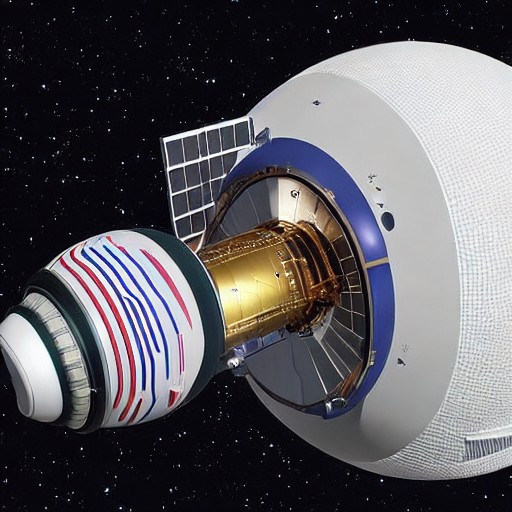
The BepiColombo mission, a European Space Agency-led venture with contributions from Japan and the United States, is at the threshold of a monumental task. Launched in 2018, this ambitious mission has traversed the vast expanse of space, using a combination of gravity assists from Earth, Venus, and Mercury, as well as an advanced ion propulsion system, to prepare for its final approach.
Next month, BepiColombo will enter Mercury's gravitational field, setting the stage for its historic orbit. This is no small feat, as the journey required nine gravity assists to fine-tune its trajectory, showcasing the complexity and precision of space exploration.
As the spacecraft nears its final phase, it has shed its ion thrusters, which were essential for the long journey. The Mercury Transfer Module, now jettisoned, was indispensable for power and propulsion during the cruise. BepiColombo’s journey, marked by years of waiting and maneuvering, is about to bear fruit, bringing humanity closer to understanding our nearest planetary neighbour.
For scientists, this mission is a testament to perseverance. While it took NASA’s New Horizons nearly a decade to reach Pluto, the journey to Mercury demands more energy and a more intricate flight path. BepiColombo’s success is a reminder of the incredible feats that can be achieved with patience and technological innovation.
As BepiColombo prepares to orbit Mercury, it embodies the spirit of exploration and the untapped potential of the solar system. This mission is not just about reaching a planet; it’s about pushing the boundaries of what we can achieve in space.