In 2007, a fragment of space debris punctured the US space shuttle Endeavour, highlighting the growing threat of orbital debris. Now, Chinese researchers have harnessed the resilience of eggshells to develop a new material that could protect next-generation spacecraft.
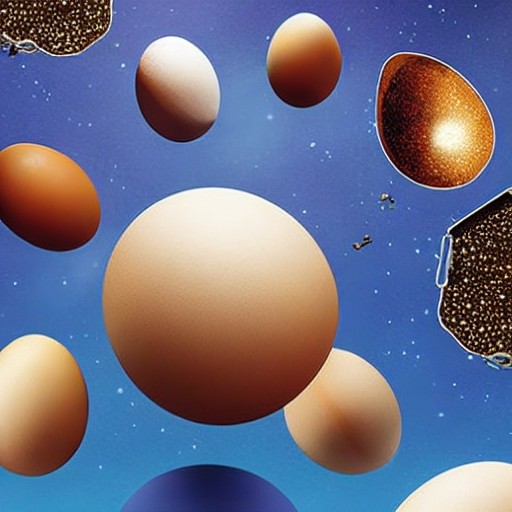
Eggshells have long captivated scientists due to their unique mechanical properties. MIT’s Pedro Reis discovered that the shape and structure of an eggshell allow it to withstand considerable force without cracking, thanks to its ovoid geometry and the way force is distributed across its surface.
The key to this resilience lies in the shell’s ability to resist cracking. When force is applied, the shell redistributes the pressure, preventing any one point from becoming overloaded. This is why, in the popular physics demonstration, walking on eggs is possible—provided you distribute your weight evenly.
By mimicking this principle, Chinese scientists have created an aluminum-based material that could offer enhanced protection against space debris. This innovation could be crucial as we launch more satellites, telescopes, and other spacecraft into orbit, ensuring the safety of future missions.