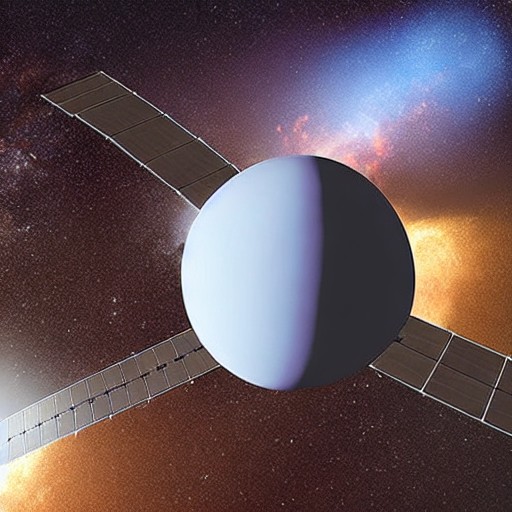
BepiColombo, named after the Italian scientist who developed the gravity assist technique, has been on quite the journey. Originally planned to land in 2020, the probe’s voyage has been anything but straightforward. A propulsion system malfunction forced a re-route, pushing back the arrival date by nearly a year. Now, after traversing 6 billion miles, BepiColombo is about to become the first probe to orbit Mercury in concert with another, providing a more complete picture of this enigmatic planet.
Mercury’s surface is a harsh environment. Daytime temperatures soar to over 800°F, while nights plummet to -290°F. To survive such extremes, BepiColombo needs to withstand these thermal fluctuations. Once in position, it will split into the Mercury Planetary Orbiter and the Mercury Magnetospheric Orbiter, each tasked with uncovering mysteries about the planet’s core, atmosphere, and magnetic field. The goal is to provide insights into how Earth and other terrestrial planets formed and evolved.
Key questions include: why Mercury has such a large iron core, how ice can exist in shadowed craters, and why it’s the only rocky planet (aside from Earth) with a magnetic field. BepiColombo’s findings could revolutionize our understanding of planetary science. Additionally, astrophysicists plan to use precise orbital data to test Einstein’s general theory of relativity, making Mercury an ideal laboratory for gravitational studies.
With BepiColombo’s arrival, humanity stands on the brink of a new era in planetary exploration. The probe’s mission promises to unlock secrets that could change our perception of the solar system and our place within it.