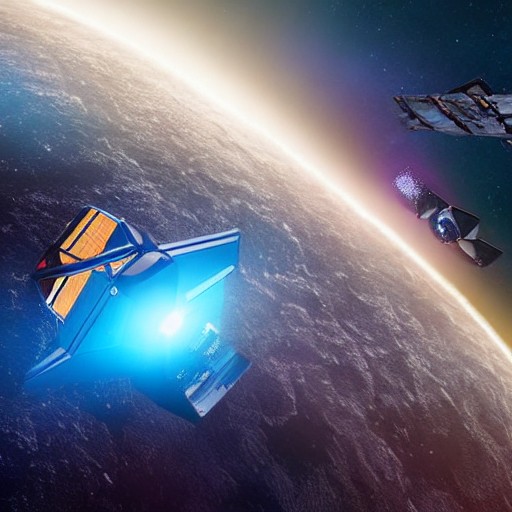
AstroForge is pushing the boundaries of space technology by deploying an AI-controlled spacecraft, a first for private space ventures. The company's 'Solo' stack, built in-house, aims to automate critical functions, from navigation to anomaly resolution, without relying on Earth-based control.
While the venture faces challenges, such as the loss of its Odin spacecraft, the founders remain optimistic. By equipping their DeepSpace-2 with 'Solo' in 'shadow mode,' they hope to test its capabilities before fully committing to autonomous operations.
The stakes are high. If successful, AstroForge could revolutionise space missions, reducing reliance on costly ground networks and enabling more frequent and independent launches. But the question remains: can AI truly handle the unpredictable and complex environment of space, or is it just a clever workaround?
Matthew Gialich, CEO of AstroForge, is clear: 'We have to go all in right now.' The success of their mission will not only be a technological breakthrough but a pivotal moment for the future of space exploration.