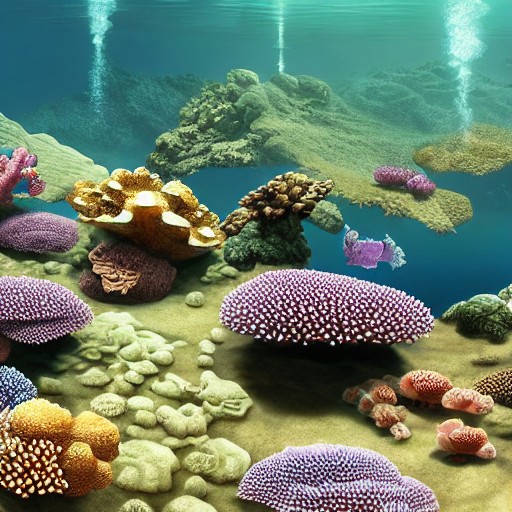
A decade-long experiment in Palau has shed light on the deep reefs, mysterious ecosystems that lie between the bright shallows and the dark depths. Zoologist Luiz Rocha, from the California Academy of Sciences, has been exploring these twilight zones, which range from 30 to 150 meters below the surface. These deep reefs are rich in biodiversity, with many species unique to this environment. However, much remains unknown, as divers can only spend a brief five to seven minutes at these depths before they must ascend, limiting the amount of information that can be gathered.
Researchers hope to uncover the basics of these ecosystems, such as their energy sources and how they support the food chain. They also seek to understand how these deep reefs might serve as a refuge for species in shallower coral reefs, which are increasingly threatened by climate change. Yet, despite the challenges, Rocha remains undeterred, driven by the discovery of new species and the fundamental questions that these deep reefs pose.
The journey to understand the deep reefs is not just about cataloguing species but also about piecing together the intricate web of life in these dimly lit environments. The ARMS, or Autonomous Reef Monitoring Structures, used by Rocha, serve as artificial homes for marine life, allowing researchers to study these ecosystems without the limitations of human diving. However, the deep reefs remain a vast and largely unexplored frontier, with much more to be discovered.