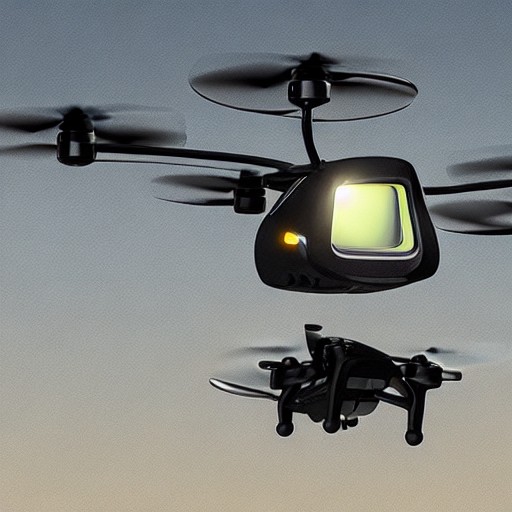
After a disaster, ultra-compact drones equipped with lightweight tactile sensors can now navigate through dark, smoke-filled or cluttered environments. Inspired by nocturnal animals, researchers at Delft University of Technology developed 'whiskers' for drones, delicate nickel-titanium wires attached to the drone's frame. These sensors help the drones estimate their distance and position relative to nearby barriers, allowing them to move without relying on vision.
The challenges were numerous, from ensuring the sensors did not destabilize the drone to filtering out false positives and developing a correction algorithm. Despite these hurdles, the drones performed impressively, finding a 2.5-foot-wide exit in a small room with 90% success rate. This technology could revolutionize search and rescue operations in disaster zones.
The researchers also encoded an exploration method that prioritizes moving through unexplored areas, enabling the drones to find their way even in chaotic environments like rubble. With only 34 KB of memory used for the entire tactile perception pipeline, these drones are both efficient and effective. This shows that sometimes, less is more in engineering, and smaller can be smarter.