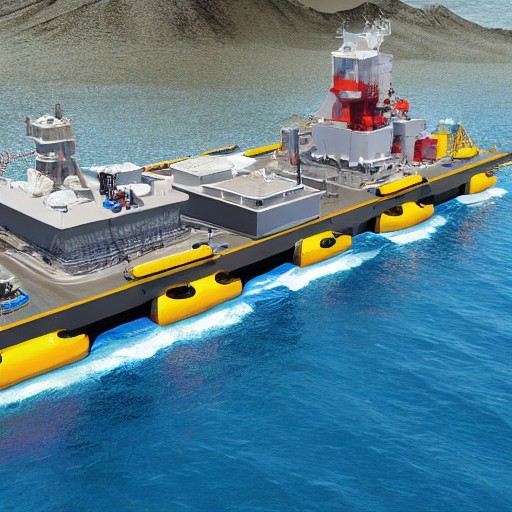
The world's first subsea geothermal power plant has taken a significant step, generating a fleeting but telling proof of concept near an underwater volcano. The prototype, deployed near the Axial Seamount in the Pacific Ocean, demonstrated the potential of harnessing the Earth's heat beneath the waves, but the journey to commercial viability remains daunting.
Andrew Redd, CEO of Endurance Energy, enthuses about the unique advantages of subsea geothermal power. 'The deep ocean offers an endless supply of cold water for cooling, and its pressure supports compact plant design,' he explains. However, the venture faces substantial challenges, including the high costs associated with deep-sea drilling and operations.
Professor Roland Horne of Stanford University is skeptical, noting, 'Technically it might work, but the costs are likely to be prohibitive compared to land-based geothermal projects.' The three-week test involved drilling two holes on the seafloor at a depth of 5,000 feet, a process that exceeded the height of the One World Trade Center by over two times.
The test is a 'proof point' for Endurance Energy, aiming to commercialize subsea geothermal power for island nations and other regions with costly fossil fuel imports. Yet, the path to widespread adoption will require significant advancements in technology and cost reduction.
The deep ocean presents a vast untapped resource, but for now, the real test lies in making the economics work. Until then, the promise of volcano power remains largely theoretical, promising a greener future but facing practical hurdles.