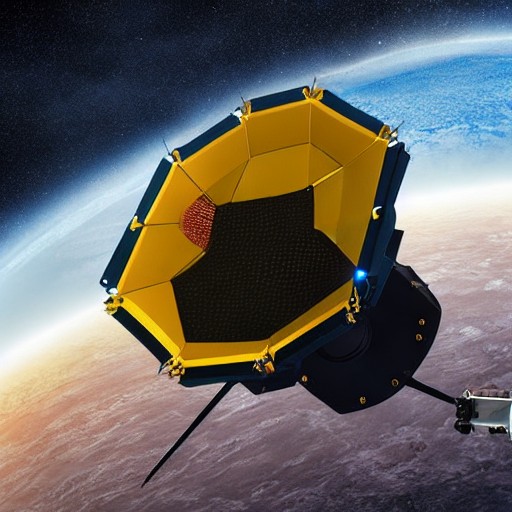
With the James Webb Space Telescope (Webb) cataloguing exoplanets in unprecedented detail, scientists are now setting their sights on the next big challenge: imaging these distant worlds. This isn’t just about seeing them; it’s about capturing the light that tells us about their atmospheres and surfaces, a task made daunting by the overpowering brightness of their host stars.
Enter the WebbSoft, a new software package that optimises the telescope’s point spread function (PSF) to produce clearer exoplanet images. The PSF describes how the telescope distorts a point of light, and traditionally, researchers either derive this function from observations or model the telescope’s hardware behaviour to estimate it. But both methods come with their limitations.
Observational methods can get noisier over time, and the hardware’s performance may vary with wavelength. Model-based approaches, on the other hand, face the challenge of having too many parameters to tune, making them computationally intensive. The WebbSoft strikes a balance, optimising the physical model to better account for the differences between observations, thus producing lower-noise images.
By tackling the noise and blurriness of exoplanet images, WebbSoft could help reveal the alien atmospheres and surfaces in stunning detail, pushing the boundaries of what we can see from Earth. It’s a small step for telescope software, but a giant leap for exoplanetary science.






