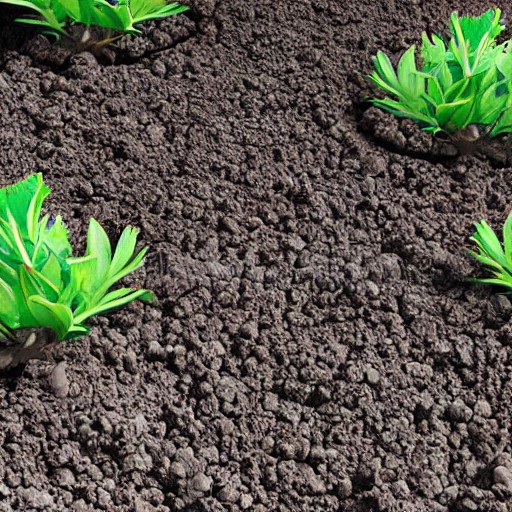
For 15 years, Sébastien Fontaine, a biochemist from the French National Institute for Agriculture, Food, and Environment, tried to kill dirt. He irradiated soil samples, but the carbon dioxide kept spewing out, indicating that the soil was still breathing. After 100 days, the emission rate remained stable, and when he added enzymes, the soil’s carbon emissions spiked, suggesting a metabolic process was still at work.
Despite scepticism from the scientific community, Fontaine’s team continued their experiments. They ruled out contamination and showed that irradiated soil could still release carbon dioxide, hinting at a non-biological metabolic process. Their findings suggest that metabolic reactions, known as metabolism when performed by cells, may not be unique to living things. This could mean that some biochemical reactions predate the emergence of life on Earth.
Their research shows that biomolecules can continue to react even when the organisms are gone. Joseph Moran, an organic chemist, commented that the chemistry of life is not exclusive to life. It’s the chemistry of geology, he added. Through their experiments, Fontaine and his team have uncovered the ongoing metabolic activity of dead soil, challenging our understanding of life and its fundamental processes.
These findings could have significant implications for our understanding of the carbon cycle and the potential for extraterrestrial life. If metabolic reactions can occur in the absence of life, it could mean that life on Earth or elsewhere in the universe emerged differently than previously thought. The experiments also highlight the complexity of soil and its potential to host non-biological chemical processes that mirror those in living cells.
For Fontaine, the journey was a long one. After years of persistence, his team’s research was finally published in Science Advances. The results have opened up new avenues of research, and the team is now working to understand the underlying mechanisms of this non-biological metabolism in soil.