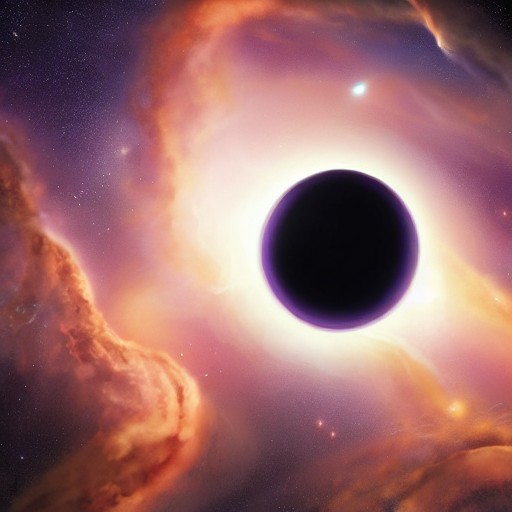
A new model suggests that dark matter, the mysterious substance making up 85% of the universe, might actually be black holes from a previous universe. This cosmic recycling theory proposes that structures larger than about 90 meters could survive the end of one universe and seed our own.
Physicist Enrique Gaztanaga argues that these 'relics' could explain both the origin of black holes and the nature of dark matter, potentially resolving decades-old mysteries. However, much work remains to be done before this theory can be tested against real-world data.
This idea challenges our understanding of how the universe operates and even its origins. Gaztanaga suggests that rather than starting from scratch, our universe could have inherited black holes from a previous universe's end.
The potential implications are profound, but so is the work needed to verify it. For now, this theory stands as an exciting new direction in cosmology, hinting at a universe with a complex and interconnected past.