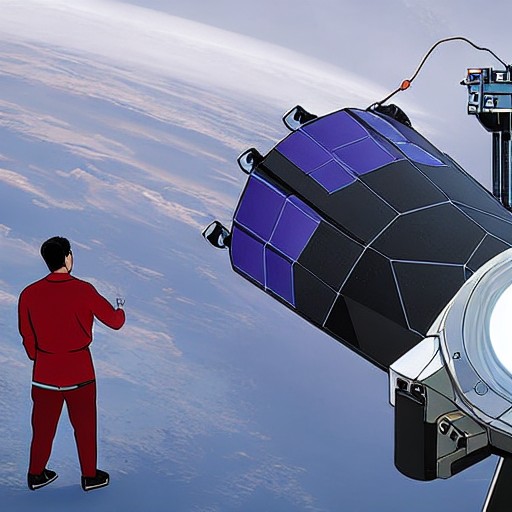
NASA's Nancy Grace Roman space telescope is set to launch ahead of schedule, adding a whopping 20,000 terabytes of data to the cosmic data deluge. Meanwhile, the James Webb Space Telescope and Vera C. Rubin Observatory are already pouring in vast amounts of information. Astronomers, once content with manual analysis, now rely on GPUs for processing this torrent of data.
Brant Robertson, an astrophysicist at UC Santa Cruz, has been a key player in leveraging GPUs to advance space science. His deep learning model Morpheus identifies galaxies with unprecedented accuracy, opening new avenues in our understanding of the universe's development. Now, he aims to turbocharge its capabilities by shifting from convolutional neural networks to transformers.
Looking beyond just data analysis, Robertson is also developing generative AI models to enhance ground-based observations, correcting for atmospheric distortion. However, with burgeoning demand and limited resources, universities face challenges in keeping up with technological advancements.
The pressure is palpable as researchers grapple with the need for more powerful hardware. Despite the National Science Foundation's support, researchers must adapt quickly or risk being left behind in this fast-evolving field. As AI continues to shape our cosmic inquiries, so too will the demand on our technology infrastructure.