The race to secure electricity for AI models has reached new heights: Meta has signed an agreement with startup Overview Energy that could see a thousand satellites beam infrared light to solar farms that power data centers at night.
In 2024, Meta’s data centers used more than 18,000 gigawatt-hours of electricity—roughly enough to power more than 1.7 million American homes for a year—and its need for compute power is only increasing. The company has committed to building 30 gigawatts of renewable power sources, with a focus on industrial-scale solar power plants.
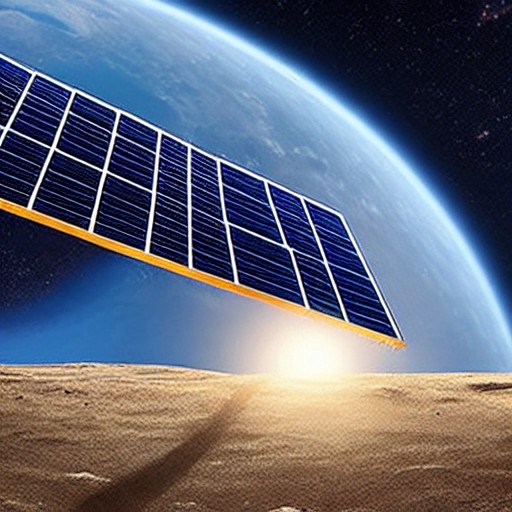
Typically, data centers turning to solar power must either invest in battery storage or rely on other generation sources to operate at night. Overview, a four-year-old startup that emerged from stealth in December, has a different solution: The company is developing spacecraft that collect plentiful solar power in space and then plan to convert that energy to near-infrared light and beam it at large solar farms—on the order of hundreds of megawatts—which can convert that light to electricity.
By using a wide infrared beam, Overview thinks it can sidestep the technological challenges and safety issues associated with transmitting power through high-power lasers or microwave beams. CEO Marc Berte says you’ll be able to stare right into his satellite’s beam without any ill effects. The technology would increase the return on investment from building solar farms and reduce reliance on fossil fuels—if it can be deployed at scale.
Berte expects to begin launching the satellites that will fulfill this commitment in 2030, with a goal of flying 1,000 spacecraft in geosynchronous orbit. Once in space, his fleet of satellites should cover about a third of the planet, with an initial deployment reaching from the West Coast of the US across to Western Europe.