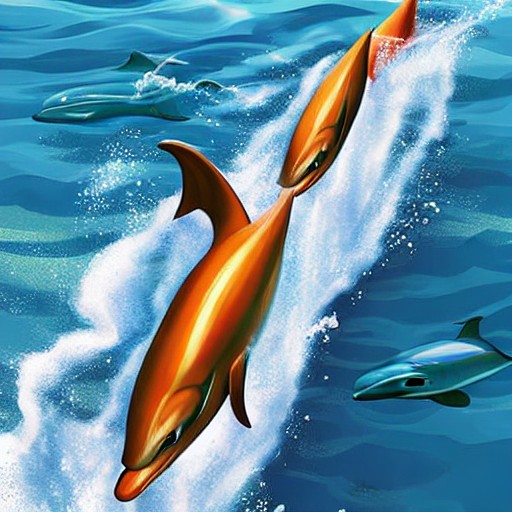
Researchers from the University of Osaka have cracked the code on dolphin swimming speed. By running supercomputer simulations, they discovered that dolphins’ propulsive prowess comes down to a cascade of vortices produced by their tail kicks.
The study reveals that when dolphins kick their tails, it creates large vortex rings that propel them forward. These larger vortices then generate smaller ones, though the latter don’t contribute much to the dolphin’s speed. Co-author Susumu Goto notes, “The largest vortices are responsible for most of the propulsion.”
The findings could inspire the design of faster underwater robots. Understanding the physics behind nature's swimmers might lead to more efficient propulsion systems in future marine technology.
This month’s roundup also includes a fascinating look at how mushrooms can detect human urine, and why crushing soda cans is so much fun for scientists. But the dolphin vortices remain a particularly cool story that almost went under the radar.