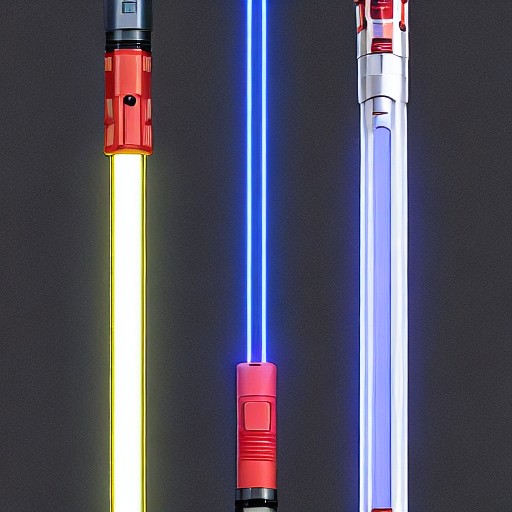
When you think of Star Wars, you think of lightsabers. Right? What could be better than a futuristic sword that lets you create awesome fencing duels like in old-time Errol Flynn swashbucklers?
But here’s a question that might make you reconsider: do those glowing blades have any mass at all? If they were just light, like their name suggests, then no. But if we analyze how lightsabers move when you wave them around, we can determine that, yes, they must.
The physics of it is fascinating. Just take a plain stick and hold it at one end versus the center—it’s easier to rotate in the middle because the mass is closer to the pivot point. The same principle applies to lightsabers: if the blade has any mass, it will make them harder to swing with the same ease as a light beam.
Think about those epic lightsaber battles on screen—Luke and Vader’s final showdown in Return of the Jedi. When Darth throws his lightsaber at Luke, the way it spins through the air is evidence that its blade has mass. It rotates around its center of mass, not just its handle.
In conclusion, while lightsabers might be a marvel of cinematic wizardry, they’re also a nod to some solid old-school physics.