Mexico City, long known for its challenges, is now officially sinking faster than a sloth in a chocolate factory. A powerful NASA satellite has confirmed this silent threat, affecting nearly 20 million people.
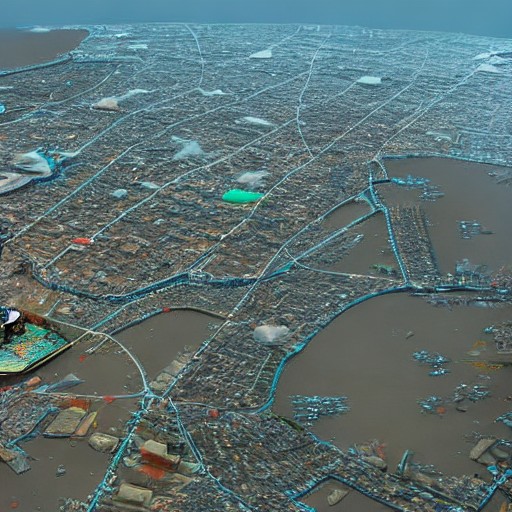
NASA's NISAR (NASA-ISRO Synthetic Aperture Radar) captured the magnitude and evolution of subsidence in different areas of Mexico City with unprecedented precision during the dry season from October 2025 to January. The map reveals areas sinking more than 2 centimeters per month, marked in dark blue.
First documented by engineer Roberto Gayol in 1925, this process is a result of intense groundwater pumping and urban development compaction over a century. Some areas have experienced up to 35 centimeters per year, causing infrastructure damage, including the Metro system.
The uneven subsidence, creating differential sinking across meters, endangers stability in streets, railways, and buildings. NASA's findings highlight the need for accurate monitoring and mitigation strategies as their technology can consistently cover global terrain variations every 12 days.