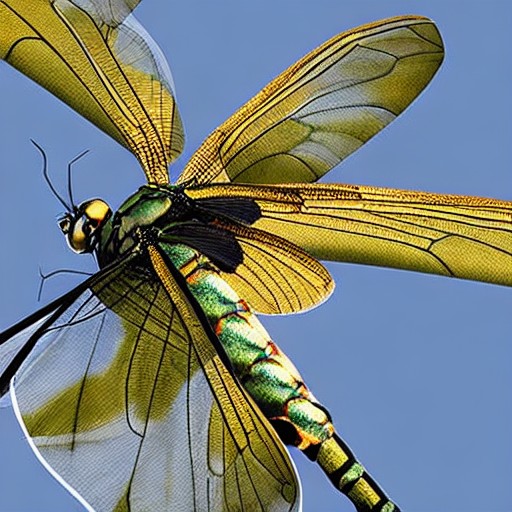
Three hundred million years ago, the skies were ruled by gargantuan insects. Meganeuropsis permiana, resembling modern dragonflies but twice as large, had an impressive wingspan of over 70 centimeters and weighed in at 100 grams—a sight that would give even a hawk pause.
But why aren’t bugs this size flying around today? For decades, the 'oxygen constrain hypothesis' provided a neat explanation. It posited that giant dragonflies needed highly oxygenated air because their breathing systems were less efficient than those of mammals, birds or reptiles. As atmospheric oxygen levels dropped, so did the potential for such bug behemoths.
However, Edward Snelling, from the University of Pretoria, has debunked this theory. Insects breathe through a unique internal system called the tracheal system. Air enters via spiracles on the exoskeleton and travels down tubes to microscopic tracheoles embedded in tissues. While larger insects can flex their bodies to aid breathing, passive diffusion limits oxygen delivery.
The issue with diffusion is its inefficiency. As insects grow, the distance oxygen must travel increases, potentially leading to a structural tipping point where muscles are starved of necessary oxygen. This means that for an insect to maintain flight performance and muscle function, it would need either wider or more numerous tracheoles—an impractical solution as they could crowd the very tissues they aim to fuel.
The next time you wonder about giant dragonflies, remember: even with a super-oxygenated atmosphere, their internal plumbing just can't keep up.