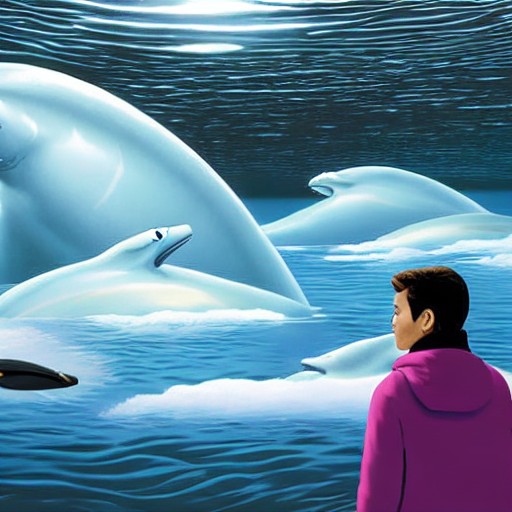
In a New York aquarium, beluga whales Natasha and Maris demonstrate the ability to recognize themselves in a mirror. According to a new study published in PLOS One, both animals exhibit behaviors associated with self-recognition—a cognitive skill previously unobserved in belugas. If confirmed, this makes them one of only a select few species that pass the mirror self-recognition test.
The mirror self-recognition (MSR) test is designed to identify whether an animal can recognize itself as distinct from others by touching or examining a mark on its body. The procedure, while simple in concept, has been passed with varying degrees of confidence only by humans, great apes, Asian elephants, bottlenose dolphins, magpies and, perhaps surprisingly, cleaner wrasse. Dogs, cats, and monkeys have failed.
The logic behind the MSR test is that recognising oneself in a mirror requires self-awareness and understanding one's body as separate from others. The psychologist Gordon Gallup invented this test in 1970, believing a mirror could reveal a species’ cognitive abilities. This study could challenge our understanding of intelligence among marine mammals.
But why does it matter? For scientists, identifying self-awareness helps us understand the evolution and mechanics of consciousness. For the rest of us, it might simply make us wonder if belugas are as clever as we assume, or just particularly good at mastering new tricks in front of mirrors.