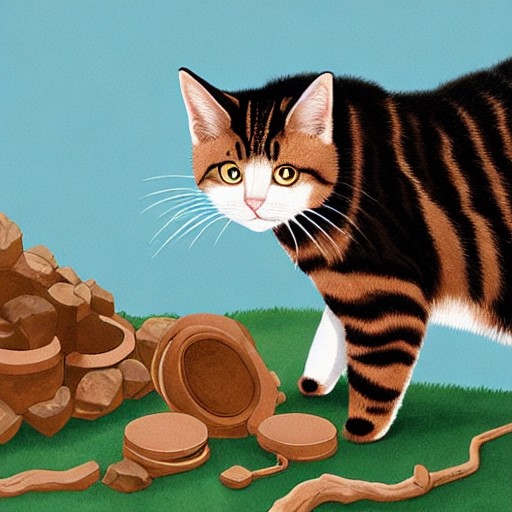
It's a regrettable reality that there is never enough time to cover all the interesting scientific stories we come across. Every month, we highlight a handful of the best stories that nearly slipped through the cracks. May’s list includes why cats seem to prefer silver vine to catnip; and the discovery of a possible prehistoric mining site in the Pyrenees.
Prehistoric mining in the eastern Pyrenees is fascinating. A team of Spanish archaeologists believes they’ve found an ancient copper smelting spot, with far more frequent human occupation than previously thought. The researchers identified 23 hearths filled with crushed green mineral fragments that had clearly been subject to burning. They are still conducting experiments to identify the material, but malachite is a strong possibility.
Much like the discovery of a new species of tiny blue octopus or why political polarization might behave like a phase transition, this prehistoric mining site adds to our understanding of human history and ancient technologies. It’s intriguing because most of the hearths are between 4,000 and 5,500 years old, suggesting a sustained use of the site over time.
Elsewhere in the animal kingdom, scientists at Cold Spring Harbor Laboratory have discovered that singing mice live high in Costa Rica's cloud forests. Their chirping call-and-response duets can change slightly depending on responses received, hinting at complex communication. This ability doesn’t require any major evolutionary leap in brain complexity; a couple of targeted changes to existing wiring patterns are enough.
From cats and their preferences for silver vine to prehistoric mining sites, there’s always something new and intriguing emerging from the scientific world. It’s a reminder that even as we understand more, there's still so much left to discover.