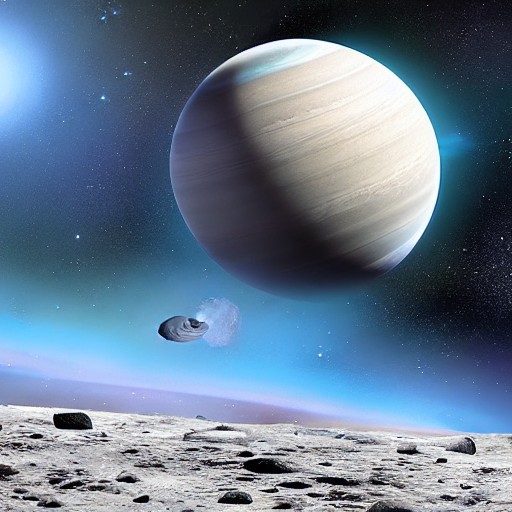
We may be closer to solving the mystery of missing planets in our solar system, thanks to a recent study. By analyzing the moons of Uranus, scientists have found that these celestial bodies could hold clues to the chaos that once reigned in our cosmic neighborhood.
The research, published in Icarus, suggests that after their formation, giant planets like Uranus and Neptune experienced extreme instability, leading to the ejection of one or two similar-sized worlds into interstellar space. The moons of these 'left behind' planets could now reveal evidence of this turbulent past.
Uranus's moon system, in particular, appears to have been destabilized at least twice: once by an impact that tilted the planet, and later due to close encounters between giant planets during a period of instability. The study found that 85 percent of simulations resulted in the collapse of Uranus’s moon system, with Miranda, its smallest major moon, standing out as a clear example of planetary turmoil.
This research does not definitively prove the existence of missing planets but offers tantalizing hints. A dedicated mission to Uranus could confirm whether Miranda is indeed a reconstruction after the chaos. If so, the moons may hold the key to understanding the true number of worlds that once roamed our solar system.