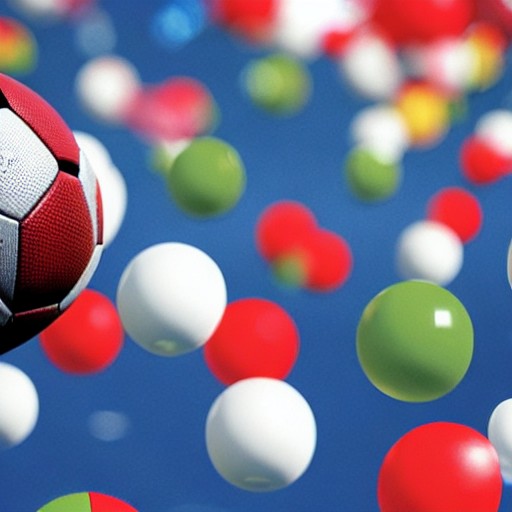
A team of researchers has been studying the new Adidas soccer ball, called the Trionda, for the upcoming World Cup. The findings suggest that long-distance kicks might not travel as far due to its unique design with deep grooves and fewer panels.
The study shows that while the ball improves in some areas, it may slightly penalize extreme distance kicks. However, clean technique and predictable flight are rewarded. Goalkeepers, defenders hitting long passes, and long-range shooters should notice visible differences first.
Adidas has been designing new balls for each World Cup since the 1970s, with significant changes to both aesthetics and structure. In recent decades, the company introduced balls with fewer panels and different surface textures. The Trionda features just four panels with deep grooves, adding more texture compared to previous designs.
By analyzing a ball’s trajectory data, researchers can derive its drag coefficient—a number that determines air resistance midflight at a given speed. The experiments involve attaching the ball to a metal rod connected to an instrument called a force balance. These tests help understand how the ball behaves during play and simulate its overall flight through the air.
The Jabulani ball from 2010 faced criticism for its deceptive trajectory, which was linked to its smooth surface. Newer designs have aimed to push this drag crisis to lower speeds by increasing the ball’s roughness with added textures like seams and grooves. However, this trade-off means that even though the most dramatic changes don’t happen until the ball is moving quite slowly, it will still slow down faster than previous predecessors during the faster portion of its flight.