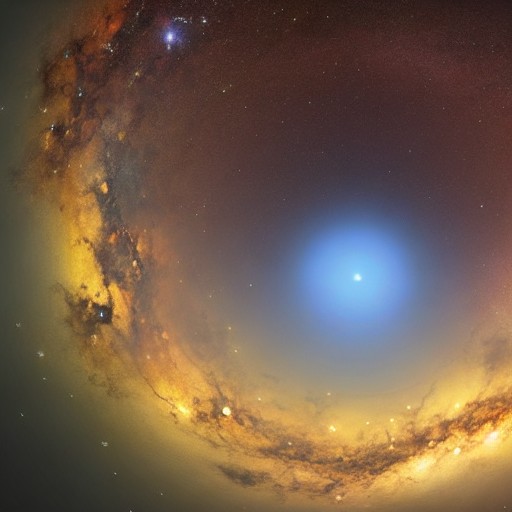
In March 2025, the Euclid mission, led by the European Space Agency (ESA), captured an unprecedentedly detailed image of the Milky Way’s central bulge. This photograph, teeming with over 60 million stars, reveals a densely packed region dominated by older, cooler stars, giving it its distinctive yellow hue.
The galactic bulge is more than just pretty; it’s a treasure trove for scientists hunting exoplanets through microlensing. By observing tiny changes in starlight, they can measure the mass of potential planets, even beyond our solar system.
Alongside this stellar census, Euclid also captures other cosmic phenomena like nebulae and molecular clouds. These appear as dark patches against the bright star clusters, acting almost as visual markers for the vast depth of space depicted in the image.
The Euclid mission’s sharpness and sensitivity are comparable to that of NASA/ESA Hubble’s wide field camera but with a broader view. Each snapshot covers an area 270 times larger than Hubble’s field, meaning that to capture the same mosaic as Euclid, the Keck Observatory would need around 2,000 hours.
Zoom in on ESASky for a closer look at this galactic marvel and join us in contemplating our place among billions of stars.