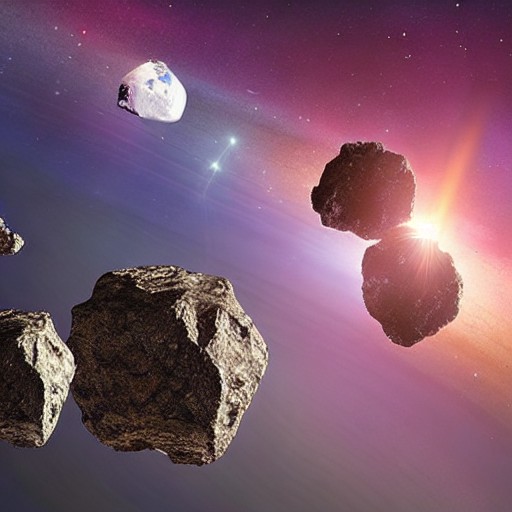
The China National Space Administration's Tianwen-2 probe has successfully rendezvoused with the asteroid Kamo’oalewa, a celestial body that shares Earth's orbital path. After a 400-day journey, it captured the first-ever images of this quasi-satellite from just 20 kilometers away.
Kamo’oalewa presents unique challenges for sampling due to its small size and rapid rotation. If successful in collecting samples, Tianwen-2 will release them back on Earth during a flyby in November 2027, marking another milestone in asteroid exploration.
With advanced cameras and precise navigation, scientists hope to uncover the asteroid's composition and internal structure, potentially shedding light on its origins and the early days of the solar system. The probe’s findings could challenge existing theories about Kamo’oalewa’s history, which previously linked it to a Moon fragment.
Upon return to Earth, these samples could provide critical insights into the early material composition, formation processes, and evolutionary history of our cosmic neighbourhood. This mission is not just an engineering feat but also a step towards solving age-old questions about our celestial backyard.