Albert Einstein's general theory of relativity predicts a phenomenon called frame dragging, where massive objects pull the fabric of space-time around with them. This effect is most pronounced in large rotating masses like black holes but has been challenging to measure accurately on Earth.
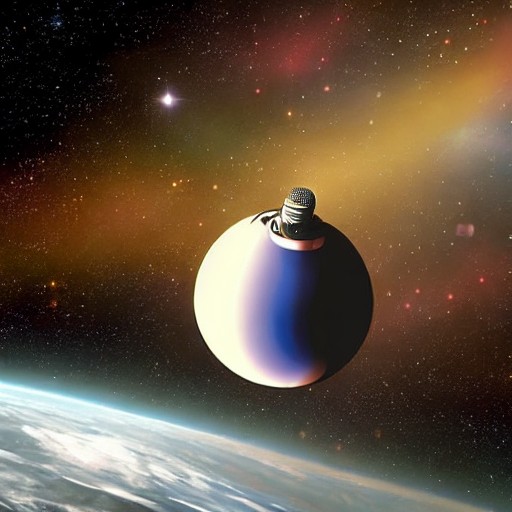
A team led by physicist Ignazio Ciufolini at the Wuhan Institute of Physics and Mathematics has used a unique satellite called LARES-2, resembling a disco ball, to achieve the most precise measurement yet. This satellite is a solid Inconel 718 sphere covered in retroreflectors, weighing in at over 294 kilos.
The design of LARES-2 with its small size and large mass gives it an incredibly low area-to-mass ratio for medium-Earth orbit satellites. This helped the scientists minimize other forces’ impacts and improve their accuracy from a few percentage points to just 0.2 percent, significantly validating Einstein's theory.
Dr Ciufolini’s disco ball in space not only tests fundamental physics but also adds to our understanding of how large bodies like planets interact with time and space. It might make you wonder if even Albert would have approved of such an orbital party ball!