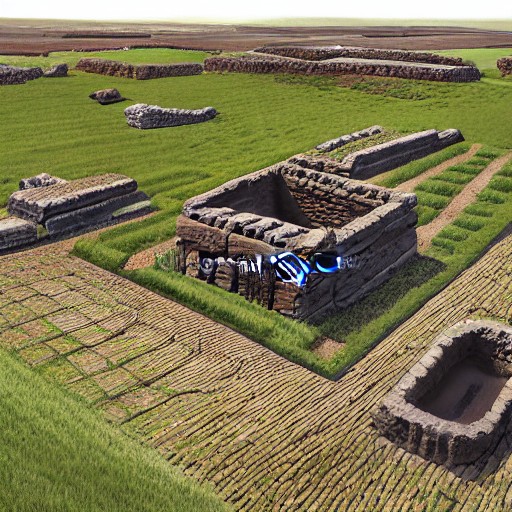
British archeologists have uncovered a stunning example of an ancient long enclosure on England’s Suffolk coast. This rare find offers insights into the lives and rituals of Britain's first farmers, who thrived between 4000 to 2500 BCE.
The rectangular open space, measuring approximately 165 feet by 65 feet, was defined by ditches whose outlines had long since faded. Using advanced dating techniques like optically stimulated luminescence (OSL), the team discovered that the enclosure’s construction dates back to around 3800 BCE, with later artifacts from the Beaker period suggesting its continued use for over a millennium.
While few artifacts were recovered, including a small collection of pottery and worked flints, these provide crucial clues about the Neolithic community's daily life. ‘This Neolithic long enclosure is a rare and significant find,’ notes Oxford Cotswold Archeology (OCA), hinting at its ceremonial or communal importance.
The discovery underscores how humans have been shaping this landscape for thousands of years, from simple farming communities to modern nuclear power stations. It serves as a poignant reminder that our technological advancements are just the latest chapter in an incredibly long history of human habitation and innovation.