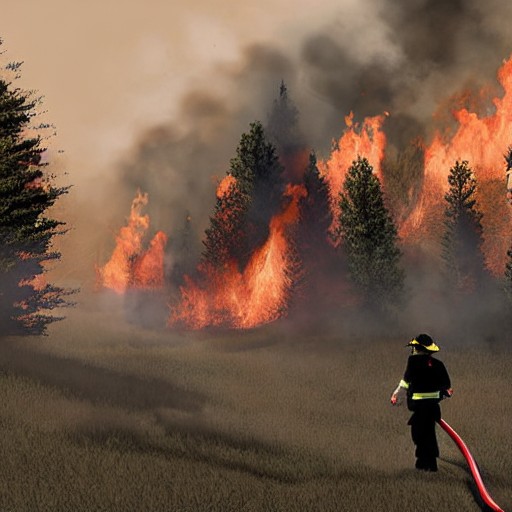
Drones capable of spraying water and fire retardants are now practicing how to extinguish wildfires early in California and Alaska this summer. These autonomous tools demonstrate potential as a rapid-response mechanism for firefighting amid climate change's prolonged wildfire season.
The drones, developed by Seneca, can carry about 100 pounds of water or fire retardant when working in swarms of four to six. Once programmed with a GPS waypoint, they fly towards their target and use onboard sensors to spot the heat signature of a fire before lining up to spray it one after another.
However, while these drones can't replace large airtankers, they could help firefighting crews respond more quickly to small fires. The California Department of Forestry and Fire Protection ran its own field test involving five autonomous drones that worked together to deploy between 500 and 1,000 gallons of foam for fire suppression on July 15.
Each fully loaded drone is limited to a round trip of 10 miles while flying at an average speed of 30 mph. This means they would ideally need to be prepositioned in fire-prone areas or first transported by ground vehicle. However, each drone can fit in the back of a pickup truck with the tailgate down, and two people can even manually carry the empty drones.
As climate change continues to transform wildfire season into a nearly year-round risk for much of the United States, these small but mighty autonomous helpers could play an increasingly important role in battling blazes before they grow out of control.