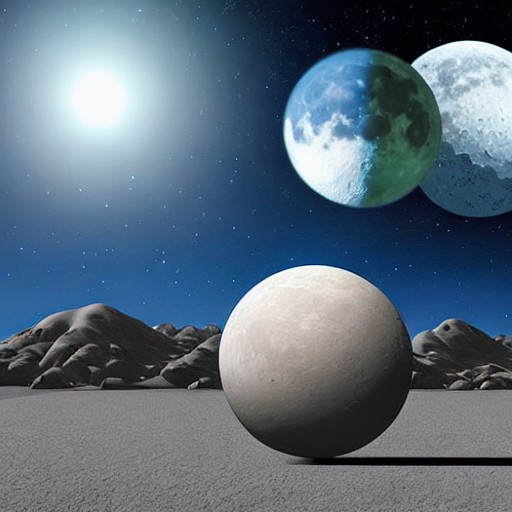
Astronomers have made a groundbreaking discovery, identifying what seems like a moon orbiting a brown dwarf in a distant star system. This marks the first time such an object has been detected outside our solar system.
The team used the CRIRES+ infrared spectrograph on the Very Large Telescope to observe CD-35 2722 B, which is about 37 times the mass of Jupiter and orbits a star with 40% of the Sun's mass. The object has a mass at least 0.9 times that of Jupiter, making it significant in terms of its mass ratio.
‘We’re blurring the lines between stars, planets, and moons,’ says Alice Zurlo from Diego Portales University, highlighting the complexity of defining these celestial bodies outside our solar system.
This discovery could lead to new theories on planet formation and even hint at conditions suitable for life. With future telescopes like the Extremely Large Telescope, we might uncover even smaller exomoons.