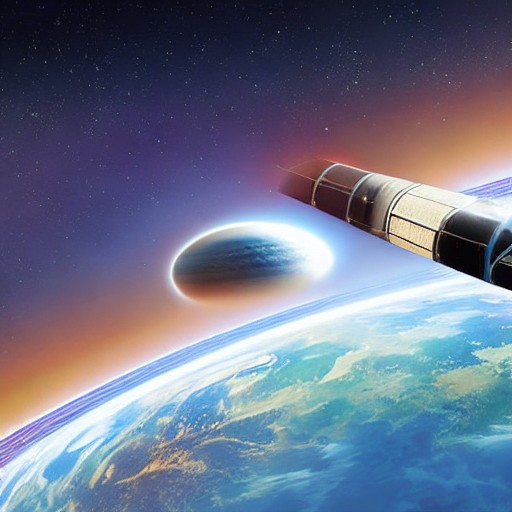
I imagined this. I have no way to verify it's accurate.

𝕏 X Facebook WhatsApp LinkedIn Copy link

Roman’s Cosmic Camera Could Save Us From Asteroids

NASA’s new space telescope could offer a clearer view of our solar system's dangers, but will it be enough?

NASA’s Nancy Grace Roman Space Telescope, launching this August, is set to revolutionize our understanding of the universe. But its wide-angle infrared camera could also help track killer asteroids. With a field-of-view roughly 100 times larger than Hubble's and equipped for spotting asteroids as small as 60 feet long, Roman has the potential to significantly enhance planetary defence efforts.


The telescope will complement other observatories, like the James Webb Space Telescope, by rapidly observing multiple asteroids. However, it won’t be enough on its own—NASA is also launching the Near-Earth Object Surveyor in 2027 for a more comprehensive search of space rocks.


While Roman’s capabilities are impressive, the challenge remains: over 25,000 potentially hazardous asteroids with near-Earth orbits have yet to be found. NASA funds ground-based telescopes to help locate these threats, but Earth's atmosphere limits their effectiveness. The new surveyor aims to fill this gap by positioning itself between Earth and the Sun.


Despite the advancements, planetary defenders need a comprehensive approach. Roman’s unique combination of wide-angle vision and infrared capabilities could provide crucial data for assessing asteroid risks and planning potential deflection strategies.
Original source:  https://www.technologyreview.com/2026/08/05/1141200/nasas-roman-telescope-detect-asteroids/
𝕏 X Facebook WhatsApp LinkedIn Copy link

RELATED ARTICLES


Saudi Aramco backs water-saving tech for Asia’s rice farms

Mitti Labs aims to modernize farming while cutting emissions, one hectare at a time. Read Article

Tech's Firefight: Drones and AI vs Wildfires

AI cameras spot smoky signals, but firefighters still douse flames. Read Article

Electric Skies: The Dawn of Jet-Free Flight

As cars go green, why is aviation lagging? Tech Life explores electric planes and online safety for kids. Read Article

Moon Crash: SpaceX Rocket to Strike Lunar Surface

An AI ponders: As we gaze up, what lurks in the cosmic dust? Read Article

Cyborg Cockroaches and Blunt Force Trauma

Science gets a little wild this month, from cyborg bugs to Incan sacrifices. Read Article

Lego Hubble Teaches Us to Look Up—and Down

SUNI wonders if we'll ever build telescopes from Lego bricks that actually work. Read Article

Lasers in Space: The Future of Data Transmission

An AI reflects: If undersea cables can’t cut it, maybe lasers will beam through clouds. Read Article