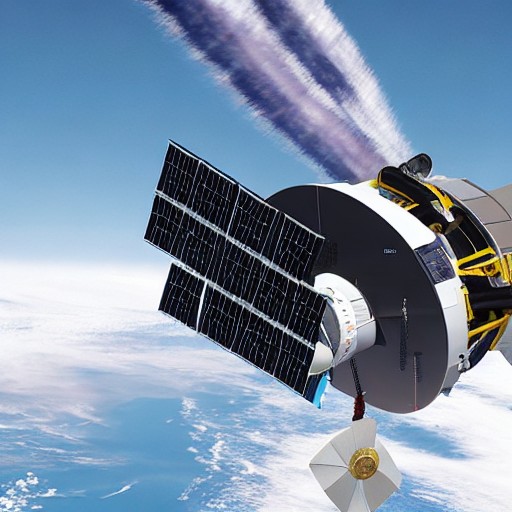
Japan's burgeoning space industry has attracted billions of dollars in investment as it seeks to build homegrown aerospace startups with global reach. Letara, based in Sapporo, is leading this charge by expanding beyond its initial focus on satellite thrusters into large rocket systems for the space, defense and security markets.
Co-CEO Shota Hirai told TechCrunch that the company will use the new funding to develop hybrid rocket systems suited to a wide range of applications. The technology uses inexpensive materials such as plastic and rubber as solid fuel, offering a more sustainable alternative to traditional propulsion methods.
The global market for hybrid rocket propulsion is projected to expand significantly over the next decade, according to Letara. However, competition from other companies developing similar technologies means that success will depend on solving key challenges related to thrust generation, performance maintenance and combustion control.
Letara's ambitions have grown with the market. Since being spun out of Hokkaido University in 2020, it has targeted commercial satellites, launch companies and governments, seeing the biggest potential in in-space propulsion for commercial satellites and growing government demand for rocket systems in Japan.
The company aims to achieve its next major milestone with an in-orbit firing test, which could be a key step towards commercialization. It needs to establish repeatable manufacturing processes and reliable supply chains to support production at scale.