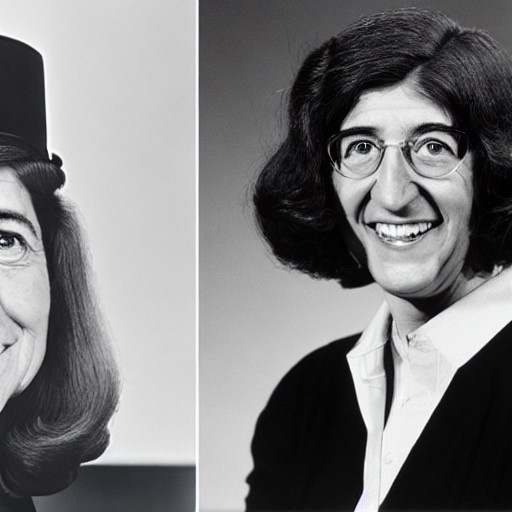
Margaret Hamilton, who coined the term “software engineering” and led the development of onboard flight software for NASA’s Apollo program, died at the age of 90. In 2016, she received the Presidential Medal of Freedom and was immortalized in a LEGO set alongside astronauts Mae Jemison and Sally Ride.
To say Margaret Hamilton was a pioneer—to say she was ahead of her time—would be a dramatic understatement. She was a software engineer at a time when that field was in its infancy, and she not only developed advanced code herself but also led a team in using that nascent technology to develop one of the most complex systems humanity had ever achieved.
“The Apollo program still stands as one of our greatest testaments to the power of collaboration, ingenuity, and engineering, and Hamilton was a fundamental contributor to that program’s success,” said Olivier de Weck, interim head of the MIT Department of Aeronautics and Astronautics.
Hamilton was born in 1936 in Paoli, Indiana, and graduated from Earlham College in 1958 with a degree in mathematics and a minor in philosophy. She worked for Edward Lorenz, the MIT mathematician who set out to construct a mathematical model of the weather. It was Hamilton who was responsible for programming the LGP-30 computer, contributing to the early days of chaos theory.
“Her legacy is not just in the code she wrote but in the way she led a team to create something that changed the world,” de Weck added.