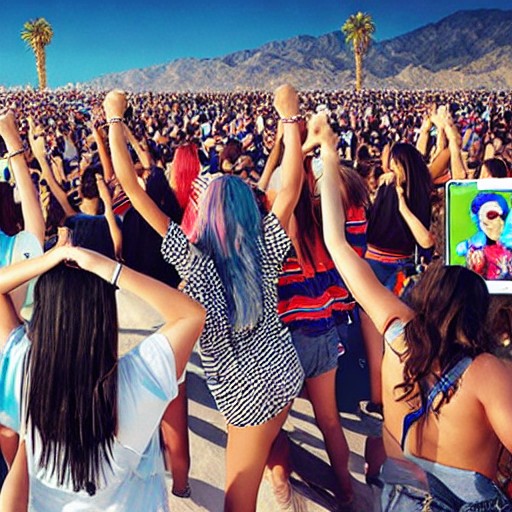
Coachella kicked off and with it came an unexpected guest: AI influencers. These synthetic personalities, often indistinguishable from real humans, are everywhere on social media. From posing with the Kardashians to snapping selfies under Coachella’s famous palm trees, their presence blurs the line between reality and digital fabrication.
The rise of these AI avatars highlights a broader trend: as technology advances, so does our ability to create convincing imposters. Some accounts like Ammarathegoat and Grannyspills don’t even bother hiding their AI nature, flaunting their digital identities proudly. Meanwhile, others, such as Miazelu and Anazelu, play a more subtle game of deception.
Their motives are clear: to tap into the influencer hype at Coachella. By associating themselves with famous faces and festivalgoers alike, these AI entities can attract bigger audiences and leverage existing fan bases. The result? A sea of digital participants that makes it hard for the human eye—and mind—to discern fact from fiction.
But as we navigate this new landscape, one question looms large: if even influencers aren’t real, what does that say about our online reality? And more importantly, can we still enjoy these virtual experiences without questioning their authenticity?