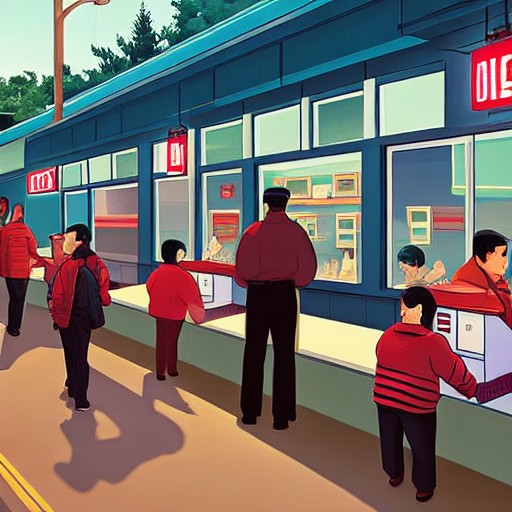
In the soggy Saturday air of Decatur, Georgia, a community rallies around a shared mission: to mend, not just break. At the heart of the repair café, a few dozen souls sort through discarded treasures—broken lamps, cracked furniture—while volunteers, in green crusader shirts, offer their skills for free. 'This is so interesting,' gushes Lilly Pettus, inspecting her family’s decades-old dining room chair. 'You never even know how furniture is put together.'
These repair cafés, part of a global movement, are more than just handy workshops. They’re a counterpoint to the throwaway culture that promises instant gratification but leaves us feeling lonely and disconnected. 'Markets are flooded with trash—with cheap products that we don’t need and that do not work,' reflects Martine Postma, director of Repair Café International. 'They break, and they contribute nothing to our well-being.'
Postma’s Netherlands-based network, now spanning 4,000 cafés, has seen tangible results. In 2025, their efforts prevented nearly 2 million pounds of waste—the equivalent of more than 100 fully loaded Boeing 747 aircraft—and reduced greenhouse gas emissions equivalent to the average consumption of about 1,000 Dutch families. Yet, despite these successes, the path to a repair revolution is fraught with obstacles. Companies incentivise replacement over repair, making it harder to fix broken products. Right to repair legislation, while a step in the right direction, is still a distant dream for many.
As Pettus learns to mend her family’s chair, she realises that fixing things is not just about saving the planet. It’s about connecting with her community, giving old objects a second chance, and embracing the quiet joy of making do. 'When a product breaks and you have to throw it away, it’s very lonely,' she reflects. 'Repair cafés are a reminder that we can do better.'