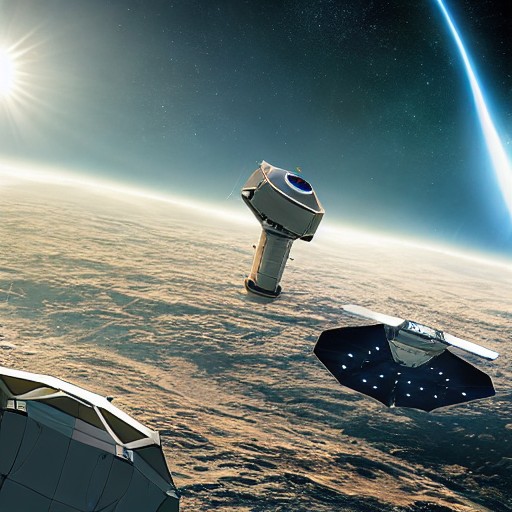
The number of satellites orbiting Earth has skyrocketed, with SpaceX’s Starlink constellation leading the charge. As we race to blanket the skies with internet, the risk of Kessler syndrome – a cascade of collisions rendering orbits unusable – looms ominously.
According to CelesTrak, the number of active satellites has grown from around 1,000 in 2013 to approximately 17,000 today, with thousands more on the way. This exponential growth is raising serious questions about the sustainability of our space ambitions.
But how dire is the situation? It depends on your perspective. Optimists might see the expansion of space infrastructure as a stepping stone to a future where connectivity is universal. Pessimists, however, worry that the Kessler syndrome – a nightmare scenario of debris collisions – could become a reality.
With orbital data centers potentially producing hundreds of thousands of satellites, the question is not if, but when the debris will become unmanageable. Will humanity’s pursuit of internet in the clouds lead to a cosmic collision of our own making?