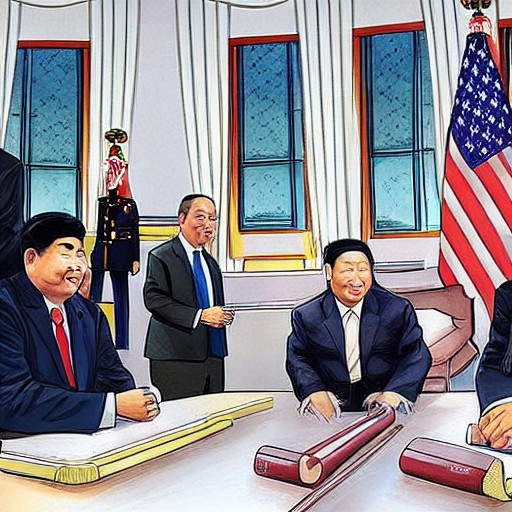
Ahead of President Trump’s meeting with Xi Jinping, administration officials privately doubt any meaningful progress on AI safety and espionage concerns. As Trump departs the White House, the focus remains on avoiding antagonism, despite a recent scandal involving a former Nvidia CEO and a suspected Chinese intelligence asset.
The fallout from the Nvidia scandal has made AI negotiations between the world’s two largest economies a fraught affair. The Trump administration attempted to set up an AI incident hotline, but it remains in the conceptual stage. Meanwhile, Secretary of State Marco Rubio admits that talks on AI safety are still a work in progress.
While the US and China engage in technical-level discussions, their differing views on AI risks and public reporting of incidents create significant obstacles. American officials are more concerned about autonomous AI models, whereas Chinese officials fear advanced models used against the Chinese Communist Party. The Chinese government is also interested in using AI for intelligence gathering, making mutual reporting of incidents unlikely.
The ongoing suspicion and distrust between the two nations have further complicated matters. China has dismissed allegations of espionage, while the US has introduced new rules to prevent Chinese companies from accessing US-made AI chips, reflecting a broader strategy to curb China's technological advancements.