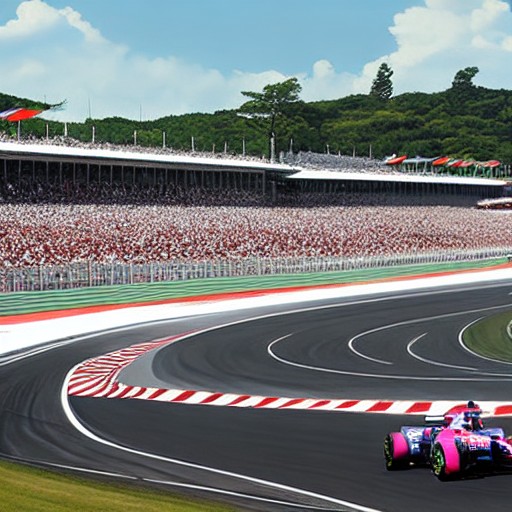
Following this past weekend’s Japanese Grand Prix, Formula 1 goes into a five-week hiatus now that war in the Gulf has made it impossible to hold races in Bahrain and Saudi Arabia. The unplanned break is probably welcomed up and down the paddock as teams, drivers, and officials try to get their heads around this new generation of F1 car and the radical new demands it places on them all. Those new challenges were on full display at Suzuka.
On the plus side, the race itself was quite exciting. That’s something you could not have said in 2025, a snoozefest with cars driving in procession and few opportunities to overtake. A hefty reduction in aerodynamic downforce for 2026 means that cars can follow each other more closely. But after this visit to one of motorsport’s most-loved, most challenging circuits, it’s very hard to avoid the conclusion that F1 has painted itself into a corner with its new hybrid systems.
The problem, as we have been warned for some time, is the new hybrid power trains, which combine a 1.6 L V6 that generates 400 kW (536 hp) with a 350 kW (469 hp) electric motor. Getting to a near 50:50 split between internal combustion and electric power was key to attracting new auto manufacturers to the sport, and Audi, Ford, Cadillac, and Honda were all enticed by the 2026 rules.
The electric motor is fed by a 1.1 kWh (4 MJ) battery pack, but depending on the track, cars are allowed to deploy 8–9 MJ from the electric side, which means recovering that energy while out on track. A few weeks ago in Shanghai, F1 was at a circuit with plenty of low- and medium-speed corners and braking zones that allowed drivers to recharge their batteries several times a lap through regenerative braking at the rear axle. But Suzuka has far fewer braking zones, so the cars could regenerate only about 3.65 MJ of the 8 MJ allowed this weekend.
At a full deployment of 350 kW, there’s enough energy to power the electric motor for less than 12 seconds. That energy deficit is made up by siphoning power from the engine via the electric motor, using it as a generator—this is known in F1 as “superclipping.”